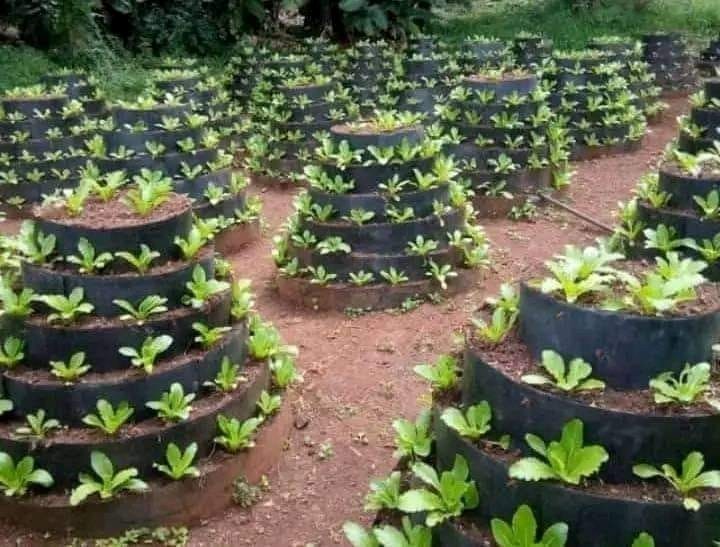

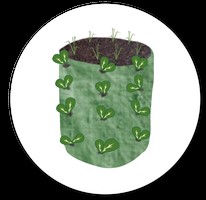
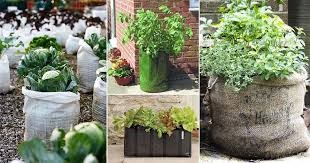
A multi-storey garden, also called a sack garden, is a vertical vegetable production system in which crops are grown on the top and sides of a sack filled with soil.
Instead of planting crops on flat land, the soil is stacked vertically inside a sack, allowing plants to grow in multiple layers (storeys).
This technique is widely used in:
- Urban agriculture
- Kitchen gardens
- Refugee camps
- Dry regions
- Areas with limited land
The sack is usually filled with a soil mixture and manure, forming a central column of stones inside.
The stones serve an important function:
They allow water to distribute evenly from the top to the bottom, ensuring all plants receive moisture.
Because plants grow:
- On the top surface
- On the sides of the sack,
the system produces many vegetables in a very small space.
This makes the system extremely valuable for household food security.
Advantages of Sack Gardens
1. Takes Less Space
One of the biggest advantages is efficient land use.
A single sack can produce vegetables equivalent to a large garden bed.
Example:
1 sack can hold 30–50 plants.
This means:
- Even a small compound
- Balcony
- Backyard cornerIt
can produce significant vegetables.
For urban areas where land is scarce, sack gardens are very practical.
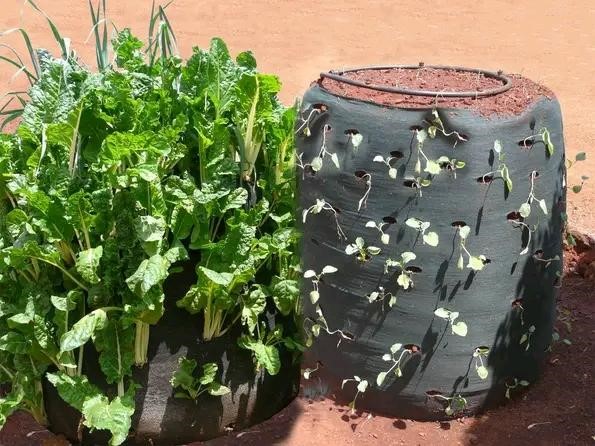
2. Not Labour Intensive
Once constructed, sack gardens require very little labour.
Activities required include:
- Occasional watering
- Light weeding
- Harvesting
- Adding manure occasionally
Because the garden is raised, the farmer:
- Does not bend frequently
- Spends less time managing weeds
- Experiences less soil compaction.
3. Provides Healthy Vegetables for a Long Time
Sack gardens allow continuous harvesting.
Leafy vegetables like:
- Spinach
- Sukuma wiki (kale)
- Amaranth
- Lettuce
can be harvested repeatedly.
This ensures:
- Fresh food supply
- Improved household nutrition
- Reduced food expenses.
4. Affordable to Make
Sack gardens are very cheap to construct.
Farmers can use locally available materials such as:
- Old maize sacks
- Polythene bags
- Plastic basins
- Old tyres
Because materials are often recycled, the cost is minimal.
This makes sack gardening ideal for:
- Low-income households
- Community gardens
- Training institutions
5. Requires Less Water
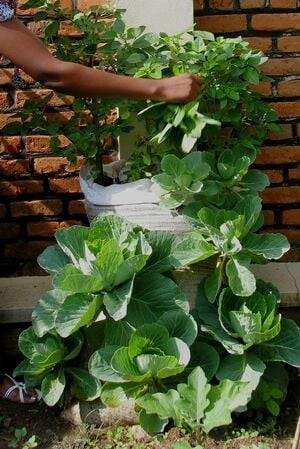
Water is concentrated in the sack instead of spreading across large soil areas.
This means:
- Less evaporation
- More efficient water use.
The stone column in the middle helps distribute water evenly through the sack.
This system works well in dry areas or during water shortages.
6. Pest Control Is Easier
Sack gardens allow better pest control through:
- Paper covering
- Intercropping
- Manual removal
Because plants are raised above ground, some pests such as:
- Cutworms
- Soil nematodesThey
are less likely to attack crops.
Farmers can also easily inspect plants daily.
7. Easy to Manage
The garden is compact and accessible.
Management tasks become easier:
- Watering
- Harvesting
- Monitoring pests
The system can also involve children in farming activities, making it a good educational tool.
Materials Required to Make a Sack Garden
The following materials are needed:
1. One Strong Sack
Preferably:
- Polypropylene sack
- Fertilizer sack
- Maize sack
It should be strong enough to hold soil weight.
2. Small Stones
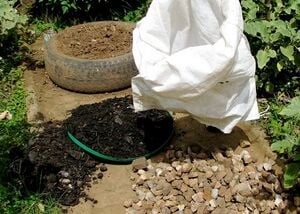
Enough stones to fill about 1/4 of the sack.
These stones create the central drainage column.
Functions of stones:
- Improve water distribution
- Prevent waterlogging
- Improve root aeration
3. At Least 40 Seedlings
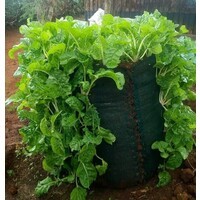
Seedlings may include:
- Spinach
- Kale
- Onions
- Coriander
- Lettuce
- Tomatoes
Leafy vegetables work best.
4. Soil Mixed With Compost Manure
A good mixture is:
- 3 parts soil
- 1 part compost manure
- Optional sand for drainage
The soil should be:
- Fertile
- Loose
- Well drained
5. Water
Water is required during:
- Filling the sack
- Planting
- Regular crop growth.
6. Bottomless Tin
A bottomless tin or pipe is placed inside the sack.
It helps create the central stone column.
Step-by-Step Procedure for Making a Sack Garden
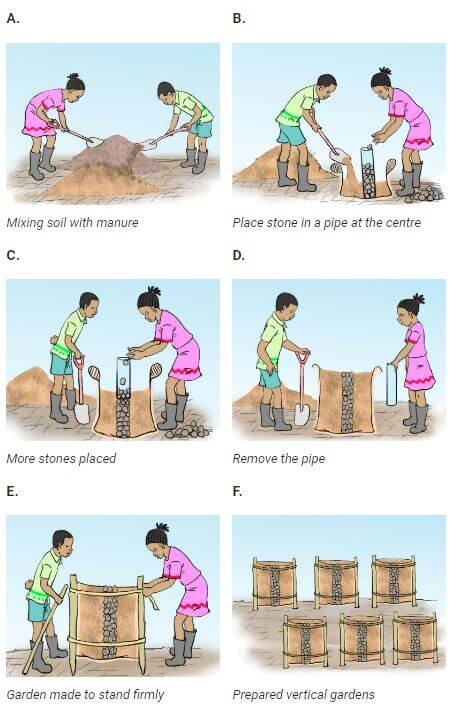
Step 1: Roll Down the Sack
Roll the sides of the sack down so the height is about:
12 inches (1 foot).
This makes filling easier.
Place the sack on:
- Flat ground
- Stones
- Wooden pallet
This improves drainage.
Step 2: Place the tin in the Middle
Put the bottomless tin in the center of the sack.
Fill the tin with small stones.
The stones form a vertical column.
This column will distribute water evenly.
Step 3: Add Soil Around the Tin
Add the soil mixture around the tin.
Press gently to compact slightly.
Do not compress too much.
Step 4: Remove the Tin Carefully
Pull the tin upward slowly.
The stones remain inside, forming the central water channel.
Step 5: Continue Filling
Repeat the process:
- Place tin
- Add stones
- Add soil
- Remove tin
Continue until the sack is full.
Step 6: Make Side Holes
Cut small holes around the sides of the sack.
Spacing:
About 15 cm apart.
These holes allow planting on the sides.
Step 7: Plant Seedlings
Plant vegetables:
- On the top surface
- On the side holes
Ensure seedlings are well watered.
Best Crops for Sack Gardens
Best vegetables include:
Leafy Vegetables
- Spinach
- Sukuma wiki (kale)
- Amaranth
- Lettuce
Herbs
- Coriander
- Basil
- Mint
Vegetables
- Spring onions
- Strawberries
- Tomatoes (top)
Leafy vegetables are preferred because they:
- Grow fast
- Have shallow roots
- Allow repeated harvesting.
Management of Sack Gardens
Watering
Water daily or every two days depending on weather.
Water should be poured in the central stone column.
Fertilization
Apply:
- Compost tea
- Rabbit urine diluted
- Liquid manure
- Fish pond water
every 2–3 weeks.
Pest Control
Use:
- Neem extract
- Garlic spray
- Ash dusting
Harvesting
Harvest gradually to encourage continuous growth.
Importance of Sack Gardens for Food Security
Sack gardens help:
- Improve household nutrition
- Increase vegetable production
- Utilize small spaces
- Reduce food costs
- Promote sustainable agriculture
They are particularly useful for:
- Urban households
- Schools
- Training centers
- Small farms
Drip Irrigation Sack Gardens
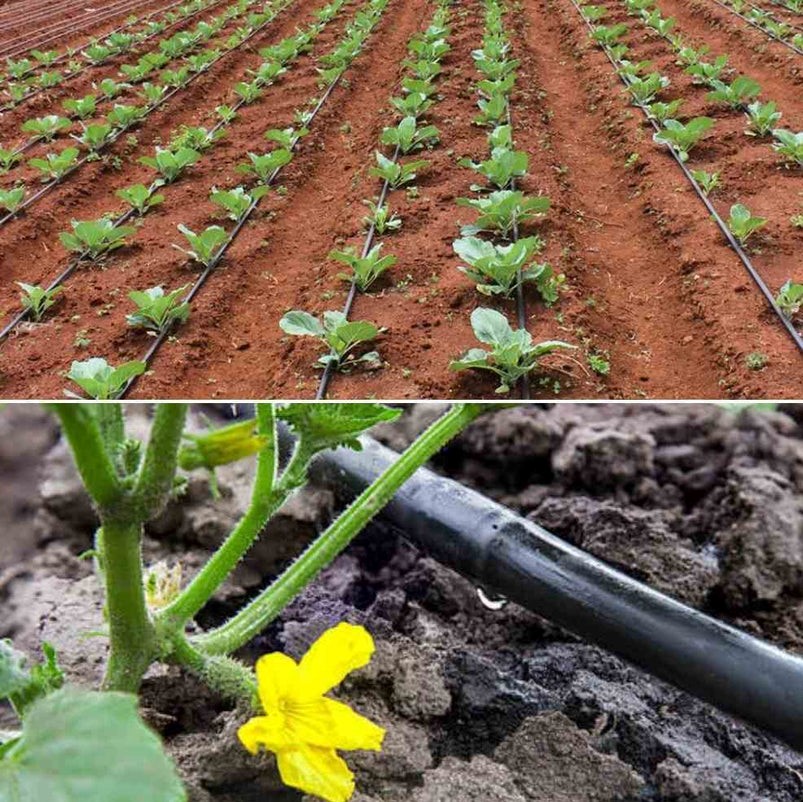
A Drip Irrigation Sack Garden is a vertical sack garden integrated with a controlled water delivery system that slowly releases water to plants through drip emitters or perforated tubes.
Instead of watering manually with a watering can, water is delivered drop by drop directly to the plant root zone. This makes water use extremely efficient.
This system is particularly valuable in dry areas, urban farms, and regions experiencing water scarcity.
Advantages
- Saves up to 70% water
- Prevents overwatering
- Reduces plant diseases caused by excess moisture
- Allows consistent plant growth
- Ideal for areas with irregular rainfall
How the System Works
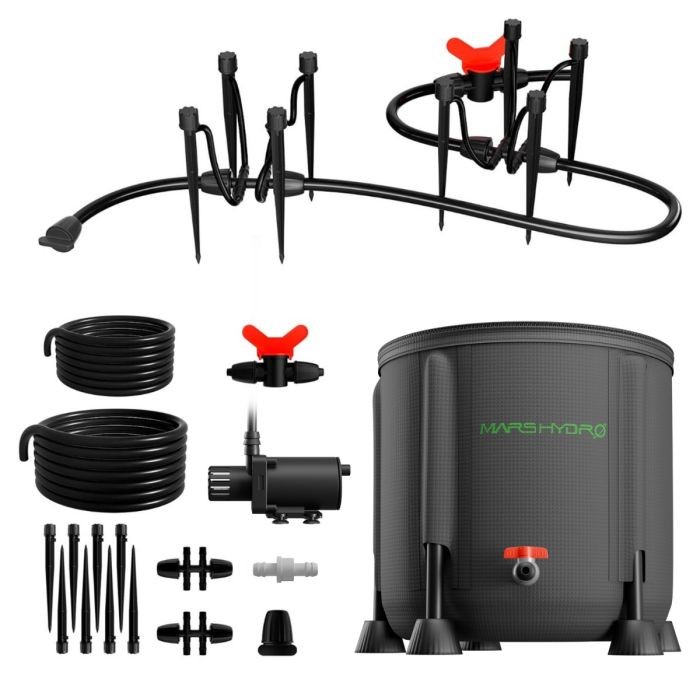
The system uses:
- A water container or tank
- Plastic pipes or tubes
- Drip emitters or small holes
Water flows slowly through the pipe and is released into the sack.
The central stone column inside the sack also helps distribute moisture evenly.
Materials Required
- One strong sack
- Soil mixed with compost manure
- Small stones for the center column
- Plastic drip irrigation tubing
- Small water tank or bottle
- Drip emitters or pin holes
- Seedlings (kale, spinach, lettuce, herbs)
Installation Procedure
- Construct the sack garden normally.
- Install a small drip pipe vertically in the center or around the sack.
- Connect the pipe to a small water container placed above the sack.
- Make small drip holes along the pipe.
- Allow water to slowly drip through the system.
Crops Suitable
- Spinach
- Sukuma wiki
- Lettuce
- Coriander
- Basil
- Strawberries
Farmers can make low-cost drip systems using plastic bottles by poking tiny holes in them and hanging them above the sack.
Keyhole Sack Gardens
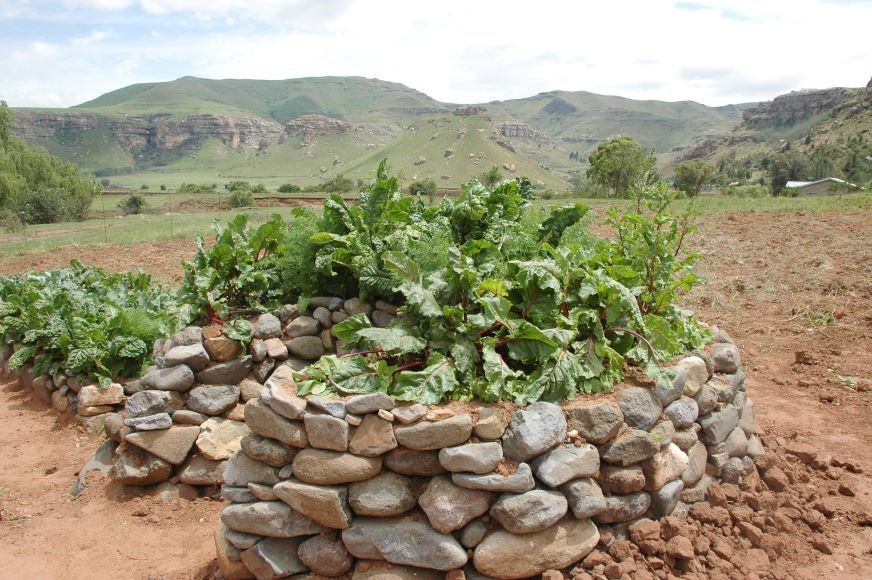
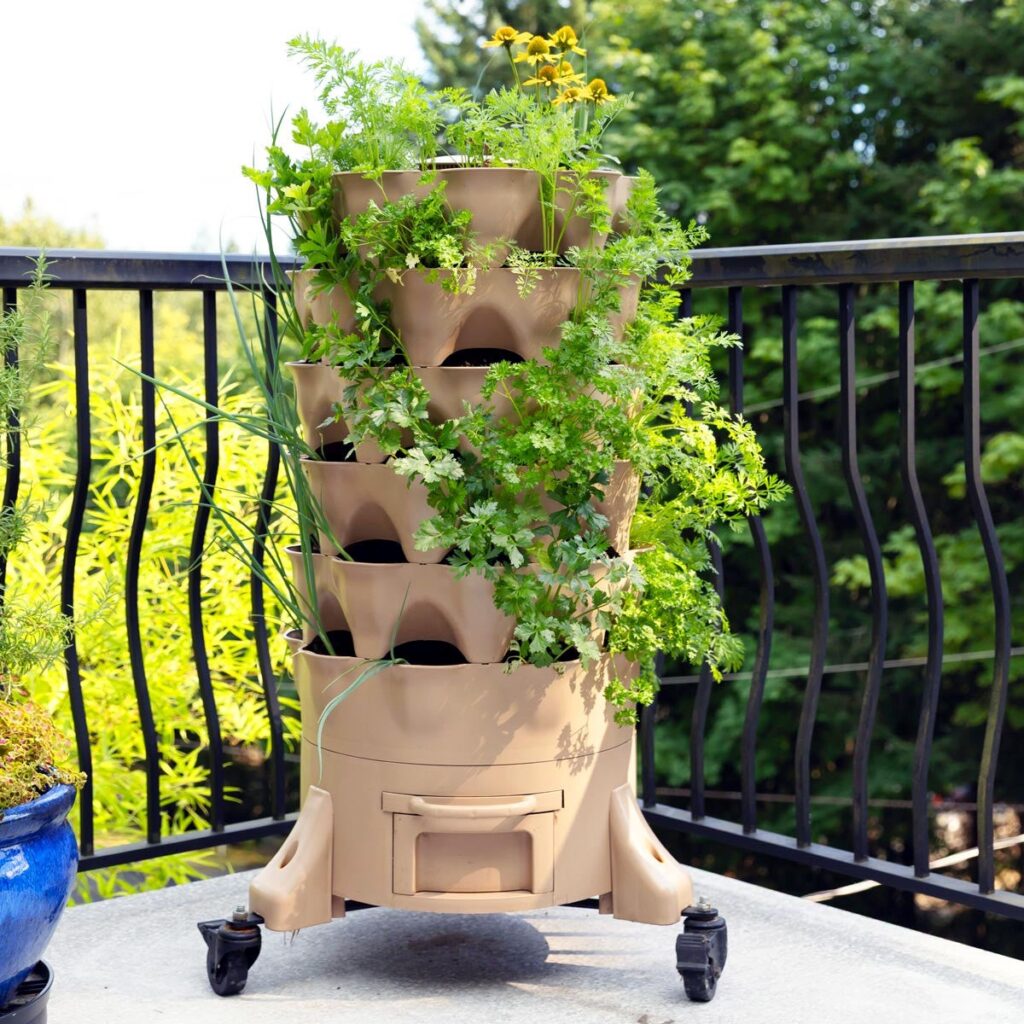
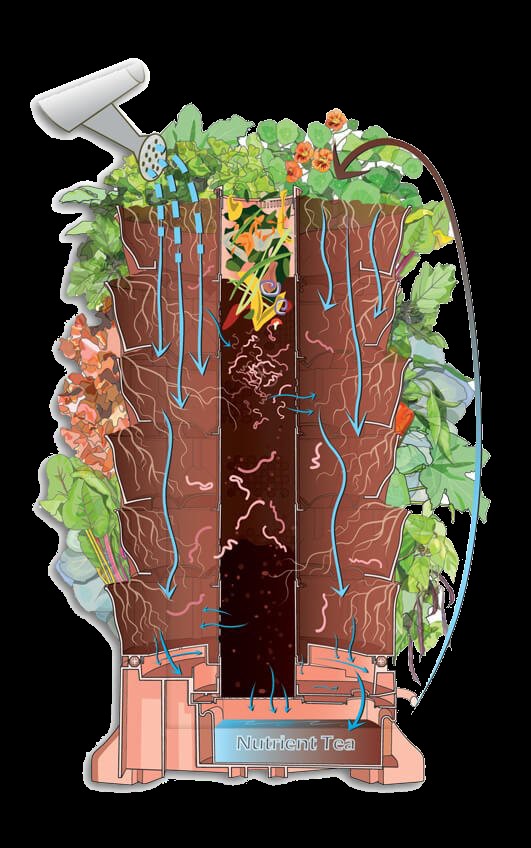
A Keyhole Sack Garden is an improved sack garden that includes a central compost basket. This basket continuously feeds nutrients to the plants.
The design is inspired by the Keyhole Garden concept used in sustainable agriculture.
Organic waste is placed inside the center column where it decomposes and releases nutrients into the surrounding soil.
How It Works
The center of the sack contains:
- A wire basket
- Filled with organic waste
Materials added may include:
- Vegetable peels
- Kitchen waste
- Dry leaves
- Animal manure
When watered, nutrients flow from the compost into the surrounding soil.
Materials Required
- One strong sack
- Soil and compost mixture
- Wire mesh basket
- Organic waste
- Small stones for drainage
- Vegetable seedlings
Construction Steps
- Place the sack on flat ground.
- Insert a wire mesh basket in the center.
- Fill soil around the basket.
- Add organic waste inside the basket.
- Continue layering soil and waste until full.
Benefits
- Continuous nutrient supply
- Recycling of kitchen waste
- Reduced need for chemical fertilizers
- Improved soil fertility
- Higher vegetable yields
Crops Suitable
- Spinach
- Kale
- Swiss chard
- Herbs
- Lettuce
Sustainability Advantage
This system promotes zero waste agriculture, where kitchen waste becomes plant nutrients.
Sack Gardens
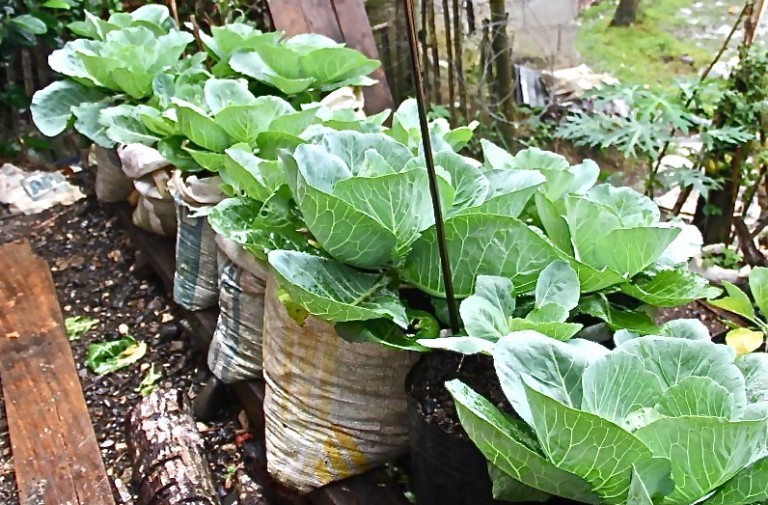
A Sack Garden is a high-efficiency production system based on bio-intensive farming principles.
The goal is to maximize food production in a very small space using organic methods.
The method focuses on:
- High plant density
- Soil fertility
- Organic inputs
- Continuous harvesting
Core Principles
1. Soil Fertility
Healthy soil is the foundation.
Farmers use:
- Compost manure
- Vermicompost
- Bio-fertilizers
- Mulch
This ensures soil remains rich in nutrients and microorganisms.
2. Close Spacing
Plants are grown closer together than in traditional farming.
Advantages:
- Less exposed soil
- Reduced evaporation
- Higher yield per sack
3. Crop Diversity
Different vegetables are grown together in the same sack.
Example combination:
- Kale
- Coriander
- Spinach
- Lettuce
This improves:
- Soil health
- Pest control
- Nutritional diversity
4. Continuous Harvesting
Farmers harvest only the outer leaves, allowing plants to keep growing.
This allows harvesting for several weeks or months.
Benefits
- Extremely high production
- Better soil health
- Reduced pest outbreaks
- Organic vegetable production
High-Yield Sack Garden Designs
A High-Yield Sack Garden is designed to maximize the number of plants that can grow in one sack.
While a normal sack may hold 30–40 plants, an improved design can hold 60–80 plants.
This increases food production dramatically.
Key Design Features
1. Multiple Planting Holes
More planting holes are made around the sack.
Spacing example:
- 10–15 cm between holes
- Multiple rows vertically
2. Layered Soil Structure
The sack is filled with layers:
- Stones at the center
- Soil and manure mixture
- Organic mulch
This improves:
- Drainage
- Nutrient availability
- Root development
3. Mixed Cropping
Plants with different root depths are combined.
Example:
Top of sack:
- Tomatoes
- Peppers
Sides:
- Spinach
- Kale
- Lettuce
4. Regular Feeding
Liquid fertilizers are added every 2 weeks.
Examples:
- Compost tea
- Rabbit urine diluted
- Manure tea
Yield Potential
A well-managed sack garden can produce:
- Vegetables for a family of 3–5 people
- Continuous harvest for 3–6 months
Why Farmers Should Adopt Sack Gardens
Sack gardens help farmers:
- Produce food with very little land
- Save water and labour
- Improve family nutrition
- Generate income from vegetable sales
They are especially powerful for:
- Urban farming
- School gardens
- Training institutions
- Women and youth groups
0 Comments